Thursday, April 22, 2010

Mercyful Fate - Melissa (1983)


Personnel:
King Diamond - Vocals
Hank Shermann - Guitars
Michael Denner - Guitars
Timi "Grabber" Hansen - Bass
Kim Ruzz - Drums

In 1983, Denmark's own Mercyful Fate released their debut album Melissa. The band did not have much time to finish the album and the album's producer Henrik Lund had an interesting method of producing the album asking the band to leave the sound room while he edited and worked on the tracks, then called them back in to the studio then asked the band to leave when he needed to make a change to the songs. Mercyful Fate was able to release Melissa and the album was a big success in the metal world, although the album is classic heavy metal, the band's style and sound influenced many bands from multiple genre's such as black metal, and power metal.

There isn't much to say about this album, when it comes to instrumentals Melissa can be compared to bands like Iron Maiden but the vocals are what really allow this album to stand out. Legendary metal vocalist King Diamond brought horror movie theatrics to Melissa, apparently King Diamond brought an altar into the studio when the band was producing the album. Guitarist Hank Shermann compared King Diamond's vocals to Robert Plant of Led Zeppelin and it's hard to deny that especially the high notes that Diamond hits on the album, originally Melissa was going to feature a cover version of Zeppelin's Immigrant Song, but that was eventually scrapped.

Mercyful Fate is one of those love or hate fans. The main game breaker will come down to King Diamond's vocals, while I enjoyed his vocals, some will not share this opinion and I can respect that. But if your a fan of that traditional heavy metal sound, I recommend Melissa to all.

Favorite Tracks: Evil, Curse of the Pharaohs, Black Funeral, Satan's Fall

The Verdict: 4.0

Sunday, April 18, 2010

Casino (1995)


Released: November 22, 1995
Director: Martin Scorsese
Starring:Robert De Niro, Joe Pesci, Sharon Stone, Frank Vincent, Don Rickles, Pasquale Cajano, James Woods, Alan King Kevin Pollak

Already known for his crime films, Mean Streets (1973), and the highly successful Goodfellas (1990), Scorsese returned to his winning formula in the mid 90's with Casino, which is considered a spiritual successor to Goodfellas.

Casino takes place in Las Vegas during the 70's and early 80's when the mob bosses in Chicago dominated the business and politics of Vegas, and their rise and fall to corporations and their own greed. Robert de Niro a long time companion of Scorsese plays Sam "Ace" Rothstein a master of betting on sports, his hot hand and methods of predicting the outcomes of sporting events attract the mob bosses who hire Sam to manage the Tangiers casino in Vegas. Despite his criminal records Sam is able to get a Casino license due to lax gaming laws and an inefficient system. He manages the Tangiers Casino efficiently eliminating cheaters trying to bankrupt the place and in the process he makes the mob bosses lots of dough.

The bosses send an old friend of Sam's, an enforcer/made man named Nicky Santoro to protect Sam, played by Joe Pesci another companion to Scorsese. Nicky is a hot head who only see's green when he comes to Vegas and he gets greedy going beyond his job, he brings in his own crew of enforcers and he starts to tear up Las Vegas setting up resteraunts and jewelery stores while committing burglary. His antics soon become an issue, attracting the police/feds and Nicky becomes blacklisted from all the major Casino's and his ties to Sam come back to haunt Sam's reputation among the gaming organizations which takes a toll on their friendship in the end.

Another part of the film is Sam's on and off relationship with Ginger McKenna a Casino hustler that he falls in love with, played by Sharon Stone. The relationship is frustrating to watch on screen, the two have a child but Ginger is still spending time with her ex boyfriend who is a con artist named Lester played by James Woods, and she is only in the relationship with Sam for his money and jewellery. The method to which Sam handles the situation is frustrating to watch at times, he kicks her out of his house, brings her back, kicks her out, it's like a vicious cycle.

You can easily compare this movie to Goodfellas in style. Casino uses a series of montages, and the main characters narrating at times giving the viewer their own points of view on the situation. Even a few minor characters get a chance to give their two cents. Scorsese shows off his flawless style and direction, however my main issue with the movie is that it relies too much on montages and narration. The first portion of the film is shot almost entirely with a series of montages and characters narrating their story. Combined with its 178 minute length, there are moments where the film drags.

As usual Scorsese brings back his usual cast with De Niro, Joe Pesci, and Frank Vincent who has a much bigger part in Casino than in Goodfellas as Santoro's right hand man. And like Goodfellas, Casino is chalk full of bloody violence and swears galore, about 420 f bombs are dropped in this near three hour film. While Nicky Santoro doesn't quite compare to Tommy DeVito of Goodfellas, Pesci delivers another great performance, and De Niro is quite contained throughout the film despite a few classic De Niro outbursts. I found the Sam/Ginger side story to be a little annoying at parts but Sharon Stone was a raging, money loving, drugged up mess, which is a good thing. She earned her best actress oscar nomination with this performance. Don Rickles, Kevin Pollak and James Woods complete the ensemble cast.

Casino is a long epic about the rise and fall of the mafia's control over Las Vegas. It tells the tale of how everyone in the organization got greedy and how their actions led to the mafia's downfall in Las Vegas and the beginning of a new consumer/corporate takeover of Vegas which is told in a rather depressing note. Fans of Goodfellas will enjoy this. I did enjoy Casino but it feels like another Goodfellas movie minus Ray Liotta and the movie did feel sluggish at times. Overall it is a good film but a step down from Goodfellas.

The Verdict: 3.5

Friday, April 16, 2010

Das Boot [The Boat] (1981)


Released: September 17, 1981
Director: Wolfgang Petersen
Starring: Jürgen Prochnow, Herbert Grönemeyer, Klaus Wennemann

Das Boot was an ambitious project by director Wolfgang Petersen, it became one of the most expensive films in German cinema history next to Fritz Lang's silent film Metropolis in 1927, it received five Academy Award nominations, and it was a major success in both Germany and the United States. It was based on the 1973 novel by Lothar-Günther Buchheim and his own experiences on a U-Boat in World War II.

German U-boats first saw major service in World War I being used by the German military to sink Allied naval ships to cripple their trade lines and war efforts. These U-boats inflicted heavy losses on the Allied navy in the first world war and the trend continued in World War II. Because of this, German U-boat crews had a reputation of being bloodthirsty cowards that relied on suprise. Das Boot turns the tables around telling the story from the Germans perspective with a more sympathetic view.

Das Boot is told through the eyes of a war journalist, Lt. Werner. He is assigned to join a submarine crew of U-96 in October of 1941. He meets the Captain of the submarine with no name played by Jürgen Prochnow, after an opening sequence at a brothel the crew leaves France on a long patrol that takes them through the Atlantic to Spain and the Allied naval stronghold of Gibraltar.

Das Boot's cast consists of various German and Austrian actors which helps give the film an authentic feel. There is an even mix of veterans and rookies among the submarine crew and each character feels very real and human, with their own strengths, weaknesses, and innocence. Going with the sympathetic view, many of the characters including the Captain show vocal criticism of the Nazi leadership, another character at the beginning of the film named Thomsen who is a decorated captain himself mocks Hitler and the Nazi regime in a celebration speech at the brothel. Some of these characters have nationalistic pride in their country but overall they just want to do their patrol and go home.

The Captain:


Jürgen Prochnow was great as the Captain, and Otto Sander made his mark with his short but memorable role as the Captain's friend Thomsen who was another submarine veteran, his scenes with Prochnow in the brothel came off as the old generation passing on and letting the new generation of rookies take over.

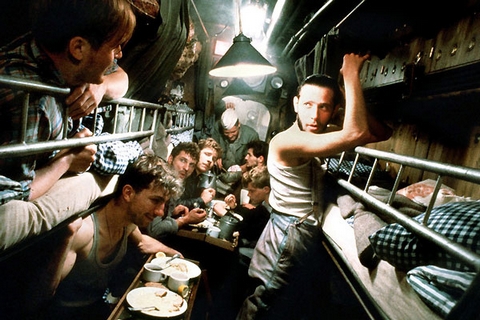
The set pieces are a huge highlight of Das Boot. Two mock U-boats were constructed for the movie. The production crew put great detail in the authenticity of the film and the interior of the U-boat shines in all of its dark and claustraphobic glory.

Some scenes:


One of the mock submarines constructed was used in Raiders of the Lost Ark (1981). German cinematographer, Jost Vacano compliments the film's set pieces with his hand-held camera creating a realistic/authentic feel with his camera shots that go through the submarine. The scenes where the camera runs down the interior sub while the crew prepares for battle really highlight the strengths of this film. Think of it like a shaky camera but done right, time to take some notes hollywood. German composer Klaus Doldinger's score blends the sound of 80's new wave with classical romanticism to create a unique soundtrack experience.

A great deal of effort was made to make this film as authentic as possible with several WWII U-boat captains serving as consultants including Hans-Joachim Krug, and Heinrich Lehmann-Willenbrock as well as the author himself who's personal photographs were used to create the grand set pieces used in the film. However Buchheim went on to criticize the films portrayal of the crew mainly for acting unprofessional in certain scenes where the crew celebrate and start to sing after sinking a ship, even criticising Petersen's adaptation as cliche. Thus the pitfalls that come with movie making.

I've always enjoyed movies set on ships and subs and the set pieces used. Das Boot comes off with a romantic and heroic portrayal of the U-boat crews. Petersen turns the tables turning these men who were considered cowards by the Allies and propaganda into heroes who were in dangerous situations themselves, the film states at the beginning that Allied anti-submarine weapons killed about 30,000 U-boat personnel and crew. There is one scene in particular where the crew sink a British vessel and they watch in horror as the flaming ship sinks and the survivors try to swim toward the sub but they cannot take prisoners and they leave the survivors to die in the sea.

The film is as anti-war as it is romantic, many of the crew members show anger toward the Nazi government because they feel as if their government is sending them to their deaths. There is an awkward moment were the Captain and his crew land in Spain for repairs and supplies and the war weary vets have an awkward encounter with some Nazi officials who throw a party for the crew, the equivalent of little timmy asking his Vietnam vet uncle if he got to kill anybody? The sub itself has a dark, claustraphobic feel to it and at times it feels like an underwater hell to some of the crew members. Overall Das Boot is a fine war film and it set the standard for current submarine movies. There are multiple versions, the directors cut I watched was a solid three hours and because of the length it does drag at some moments.

I recommend this film to all, I watched the english dubbed version and because a majority of the actors were able to do English voice overs for their characters it isn't really an issue but there was one character who didn't do an english voice over and you might be able to spot which character it is right away. I recommend that you watch the film in its German language. I will eventually watch this movie in German so I could see this movie grow on me in the future.

The Verdict:
4.0

Monday, April 12, 2010

Electric Light Orchestra - The Electric Light Orchestra (1971)


Personnel
Roy Wood: Guitars, Bass guitar, Cello, Oboe, Bassoon, Clarinet, percussion, period woodwind instrument; Krumhorn (as stated on original vinyl record sleeve), vocals
Jeff Lynne: Guitars, bass guitar, piano, keyboards, vocals.
Bev Bevan: drums, Percussion, vocals.
Bill Hunt: French horn, Hunting horn.
Steve Woolam: Violin.
Rick Price: bass on some original tracks (erased and redubbed by Wood and Lynne)

Later released as "No Answer" in the US in 1972. Funny story is that an US album executive called some associates of ELO to get the album name and they weren't able to get the name so they called the album "no answer" thanks to a big misunderstanding.

The early 70's consisted of several bands that were heavily influenced by the sound of The Beatles and other British invasion bands of the 60's. From Big Star to T.Rex, Electric Light Orchestra was heavily influenced by the sound of The Beatles but unlike the other two bands I just mentioned, they blended pop harmonies with pop/rock and classical music.

The Electric Light Orchestra is an album influenced by Baroque style music which was popular in the 16th to 18th centuries with composers like Vivaldi and Bach. Their debut album has the pop/rock harmonies but the use of cellos and violins give the album a much darker tone then their later works. At times the cello gives the songs a beefy/powerful sound and you start to wonder if Bach came back from the dead to produce this album. You can find various references to The Beatles on this one as from the track, "Look at Me Now" which has shades of Eleanor Rigby written all over it.

The Electric Light Orchestra is an album vastly different from their later albums and it was interesting to hear the "Baroque and Roll" sound they had going for it. There are a few songs that I really enjoyed like "10538 Overture" but the Baroque infused sound is still growing on me. It's an above average album but I would recommend it to fans of ELO who want to see the bands early roots, or even fans of psychedelic rock.

Favorite Tracks: 10538 Overture, First Movement (Jumping Biz), Mr. Radio

The Verdict: 3.0

Sunday, April 11, 2010

Billy Joel - Piano Man (1973)


Now if I judged an album based on the cover, I would have flushed this one down the toilet, but since I'm not shallow (I wish), I gave this one a spin. Beginning his career in the 70's, Billy Joel would become one of the top selling artists in the United States during his 30 year career. Despite his album successes, Joel was a polarizing figure in music, people and critics either loved his work or they hated it, who can blame people? The guy isn't exactly a model citizen, but honestly who is? Though Billy Joel would release his big billboard hits in the late 70's and 80's, his sophomore release Piano Man showcased Billy Joel's "signature sound".

Piano Man is all about Joel's songwriting with an emphasis on storytelling, simillar to a couple of singer/songwriters in the 70's, Elton John and Bruce Springsteen. The album has an emphasis on "western" themes with the small piano epics "The Ballad of Billy the Kid", "Travelin Prayer", and "Captain Jack". Though the songs are lighthearted in the storytelling department, these songs are entertaining and well done both instrumentally and vocally by Joel on the piano. But the best song on this album has to be the title track "Piano Man", Joel's definitive song, a fictionalized take on his early career in Los Angeles as a lounge singer. Though he isn't the best vocalist, Billy Joel's vocals are very distinct and he bring that honest working man approach to the songs and his delivery on tracks like Piano Man are great.

Despite the western theme on the album, there are a couple of songs that have a jazz/pop sound that would dominate Joel's later albums, like "Ain't No Crime", and "Worse Comes to Worse". Though the rest of the songs are filler compared to the big three tracks of this album, "Piano Man", "Ballad of Billy the Kid", and "Captain Jack", they maintain the albums pace and flow and they're decent at best pop songs. Overall this is a good album, fans of singer songwriters might enjoy this album, but like I said. Billy Joel is one of those love or hate musicians.

Favorite Songs: Piano Man, The Ballad of Billy the Kid, Stop in Nevada, Somewhere Along the line, Captain Jack

The Verdict: 4.0

Friday, April 9, 2010

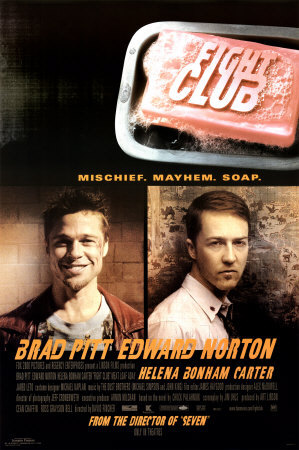
Fight Club (1999)


Released: October 15, 1999
Director: David Fincher
Starring: Edward Norton, Brad Pitt, Helena Bonham Carter

Fight Club is based on the 1996 novel by Chuck Palahniuk. Fight Club had mixed reviews at the time it was released and it wasn't a big box office hit that 20th Century Fox was hoping for. But like all "cult classics" the film had later success and today you can't get through a discussion about movies with friends without somebody name dropping Fight Club, and the famous "The first rule of fight club is, you do not talk about fight club." quote that has become synonymous with pop culture.

Edward Norton plays the narrator with no name who works for an automobile company. He lives a boring incomplete life, and he has severe problems with insomnia. He tries to fake his way into a support group of testicular cancer victims to cure his insomnia but that doesn't really work out. During one of his work trips he meets an unusual man on the airplane, a soap salesman named Tyler Durden played by Brad Pitt, his life changes completely and the two become pals. After a "fun" fist fight in a parking lot outside of a bar, the two start up a fight club in a local bar's basement.

Despite getting the shit beat out of him week after week, the narrator enjoys fight club, he finds it to be a means of breaking free of his boring life, and it gives him a new outlook on life, making him feel like a somebody. The club's popularity slowly increases overtime, corporations sponsor it, the two start to franchise fight club beyond their local headquarters establishing new clubs in other states/cities. Tyler also begins to take the club in a new direction going from fights in local bars to a city wide gangs/organizations committing small acts of vandalism that go from trashing small businesses/stores to setting office buildings on fire and blowing stuff up.

Fight Club is an interesting movie of mayhem, anti-authority, destruction, and nihilism. David Fincher called his film a coming of age movie for people in their 30's. The narrator is one of those characters that most people can relate to in some way. The film is filled with various quotes that sum up the movie in a nutshell, Tyler Durden's famous "We're the middle children of history" quote especially. Because of that the film has a really gritty/dark feel with the cinematography, though the movie title is misleading the fights in the film fit the cinematography, they're bloody, grimy, and visceral.

The acting in this film is top notch. Brad Pitt and Edward Norton both put on great performances as Tyler Durden and the narrator. Norton is the stale boring office desk employee and Durden is everything Norton's character isn't but wants to be, confident, unpredictable, exciting, etc. Brad Pitt deserved an oscar nomination for his role. The movie also has great performances from Helena Bonham Carter who's Norton's love interest Marla and musician/stage actor Meat Loaf is great with his small part.

I'm starting to become a fan of David Fincher's film style. Fight Club does it all, even breaking the 4th wall at parts in the film. My only complaint with the movie was that I found the first twenty minutes to be slow at times but once the narrator meets Tyler Durden the rest of the movie is a rampage of epic proportions until the end. One of the best movies of the 90's that lives up to the hype and praise, I will view more movies by Fincher but if you're a fan then you have to see this film.

The Verdict: 4.5

Tuesday, April 6, 2010

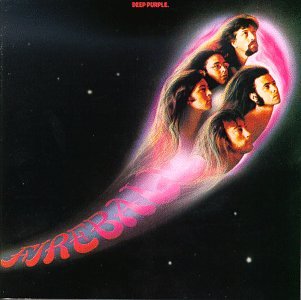
Deep Purple - Fireball (1971)


Personnel
Ian Gillan - vocals
Ritchie Blackmore - guitar
Roger Glover - bass
Jon Lord - keyboards, Hammond organ
Ian Paice - drums

The Mk II lineup of Deep Purple was off to a great start with their classic Deep Purple in Rock album which was a big success. It made perfect sense to release a followup about a year later, Fireball. The album hit #1 on the UK charts which would mark the beginning of a small streak of #1 albums after Fireball's release.

The album is a classic example of a sophomore slump, I know this was the bands fifth album but this was the second one for the Mk II lineup. The title track "Fireball" opens the album with a bang, but the rest of the album moves at a slower more bluesy pace compared to the title track and In Rock. I can't say anything else about the album, Strange Kind of Woman, The Mule, and Fireball are solid tracks but the album feels kind of lifeless and bland when stacked up to In Rock. Maybe this album will grow on me down the road but I'm not really liking it.

Favorite Tracks: Fireball, Strange Kind of Woman, The Mule

The Verdict: 3.0

Saturday, April 3, 2010

The Usual Suspects (1995)


Released: August 16, 1995
Director: Bryan Singer
Starring: Gabriel Byrne, Chazz Palminteri, Kevin Spacey, Stephen Baldwin, Kevin Pollak, Benicio del Toro, Giancarlo Esposito, Pete Postlethwaite, Dan Hedaya, Suzy Amis

About five years before his work with the X-Men movies, Bryan Singer directed this little movie that could with a six million dollar budget. It became a big sleeper hit of that year, making a cool $25 million dollars at the box office and Kevin Spacey won an best supporting actor oscar for his role, pretty much making him the toast of hollywood in the mid to late 90's with films like L.A. Confidential, Se7en, and American Beauty.

In The Usual Suspects, the FBI is investigating a fire and explosion that broke out on a cargo ship in California. Only two people survive the blaze, a badly burned Hungarian, and a cripple who was a con artist Roger "Verbal" Kint played by Kevin Spacey. Kint agrees to testify his side of the story in return for immunity from the authorities and just when he thinks he's free, he is pressured into another interrogation from a dedicated customs agent Dave Kujan. Kint tells his side of the story leading up to the events of the explosion. He was a member of a special five man crew including himself that consists of multiple b-list actors at the time, Stephen Baldwin, Benicio del Toro, and Kevin Pollak to name a few.

Without ruining the film I will try to describe each member. Dean Keaton (Gabriel Byrne) a former corrupt police officer who is trying to go legit, Michael McManus (Stephen Baldwin), Fred Fenster (del Toro), and Todd Hockney (Kevin Pollak). The crew comes together and does a series of jobs, their greed gets the best of them and when they rob a jewel thief they steal his briefcase expecting jewels but instead they get a case full of cocaine. Their stunt attracts the man who handed out the assignment, Kobayashi a lawyer working for a faceless but notorious crime lord named Keyser Söze. He gives the crew another job via blackmail to hit the cargo ship at the beginning of the film that contains $91,000,000.00 of cocaine, wipe out the crew members and in return they get to sell the coke and split the profits among themselves.

I can't really talk about the movie that much otherwise I will ruin the ending, the secret at the end is well known by now and if your loud mouth friends who spoil movies blurted out the ending then you might have a different opinion on the movie. Luckily nobody ruined the film for me but I did have the ending figured out by the end, however the buildup leading to the famous ending was great. The movie is very short compared to other crime movies, about 106 minutes. I found the length and films pacing to be perfect, it doesn't screw around with pointless sub-plots, and even though the film is told through Kint's flashbacks, the story is straight to the point.

The cast of b-actors works in this movie, I even found Stephen Baldwin to be enjoyable as the angry enforcer McManus, to Benicio del Toro and his characters hillarious accent and humor. But Kevin Spacey steals the show as Kint, the man with the plan. Bryan Singer and writer Christopher McQuarrie had the characters taylor made to fit the cast, my only complaints were the police/FBI characters like Kujan who was your classic tough guy, always get your man type officer/agent, but it's a neo-noir movie so no big deal.

The movie is a classic neo-noir film told through the eyes of a con artist with dark cinematography. The film is carried on the strength of the big conclusion, but most viewers might be able to see it coming. Sounds like I'm talking about an M. Night Shyamalan film but don't fret. The film has a terrific cast of b list actors with great pacing and length that isn't too long or too short, if your looking for a good throwback to the neo-noir genre, give this film a try.

The Verdict: 4.0

Thursday, April 1, 2010

Deep Purple - Deep Purple in Rock (1970)


Personnel:
Ritchie Blackmore - guitar
Ian Gillan - vocals
Roger Glover - bass
Jon Lord - organ
Ian Paice - drums

In 1969, Deep Purple was lacking a lead singer and bass guitarist after Nick Simper and Rod Evans were booted from the band and in dire need of cash after their American record label Tetragrammaton went out of business. After a brief search for a new lead singer, Ritchie Blackmore found Ian Gillan and bass guitarist Roger Glover to fill the holes. Both members joined Deep Purple in secrecy early on and it wasn't until around 1970 when the Mk II lineup would become official and in June of 1970 Deep Purple in Rock or In Rock was released through Warner Bros. Records in the United States.

The album was a moderate success in the United States but this time Deep Purple was able to break some ground in their home country, something they failed to do with their earlier albums. In the late 60's the band was struggling to find their sound but with In Rock, it was established that Deep Purple was going to be a hard rock band from then on with the album's opening song "Speed King" laying down the new law with a loud violent thud.

The Mk II lineup has the dynamic three piece of Ian Paice, Jon Lord, and Ritchie Blackmore that made Deep Purple great but with the addition of Ian Gillan on vocals, new opportunities opened for the band. Gillan brought raw power and a great falsetto that the band lacked in the 60's, not to dump on Rod Evans because he was a capable vocalist too but the way I see it, I think of Ian Gillan when I think of Deep Purple.

This album isn't entirely a straight up rock album. The band's magnum opus "Child in Time" is a progressive rock epic that showcases Ian Gillan's powerful vocals. Child in Time is followed by Flight of the Rat, a slightly shorter song but another great showcase of Deep Purple's talented three piece of Blackmore, Lord, and Ian Paice who caps the song off with a testosterone fueled drum solo.

Deep Purple in Rock is a fantastic display of five gifted members and the mastery of their instrument and role. Though the band would release good solid albums after In Rock, this one stands will stand the test of time as Deep Purple's best. The psychedelic tone of the 60's albums is gone but with great progressive/hard rock material like this, it doesn't really matter. Deep Purple in Rock is a must listen to and must own by all rock fans who call themselves experts.

The Verdict: 5.0

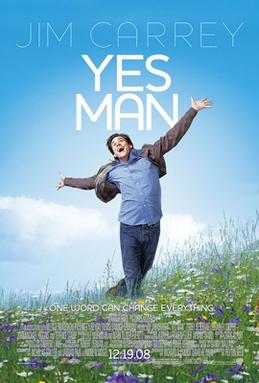
Yes Man (2008 film)


Released: December 19, 2008
Director: Peyton Reed
Starring: Jim Carrey, Zooey Deschanel, Bradley Cooper, John Michael Higgins, Terence Stamp

You either love Jim Carrey or you hate him, I'm in the love camp as a fellow Canuck. Jim Carrey sort of strayed from his comedy roots in the mid to late 2000's taking on more serious roles in movies like Eternal Sunshine of the Spotless Mind, and the The Number 23. With Yes Man, I got that vibe that Carrey was returning to comedy.

Yes Man is a film that most people can probably relate too. Jim Carrey plays Carl Allen, a low level bank employee in Los Angeles who was a coming off a nasty divorce. The divorce turned him into an apathetic wreck stuck in a boring daily routine of going to work and then coming home. He is avoiding his good friends Pete (Bradley Cooper) and Steven Hyde I mean Rooney played by Danny Masterson of That 70's Show fame. Masterson pretty much plays a less edgy carbon copy version of his iconic television character. Things are going good for Pete and he's on the verge of getting married but he's worried about Carl because of his lifestyle and negative view of life.

Carl ignores his friend but eventually he tries to change his ways attending a seminar with another friend of Carl's called "Yes!" run and promoted by a millionaire guru Terrence Bundley played by Terrence Stamp who promises his fans that saying "Yes" to everything will make their life more rich and fulfilling. Carl leaves the seminar not really agreeing with it but after a series of random events in which he meets an indie rocker and new love interest Allison played by Zooey Deschanel he begins to say yes to everything and his life changed completely.

Carl begins to take flying lessons, language corses, guitar lessons, picks up a Persian wife on the internet, he pretty much says yes to everything. His decisions not only make Carl a happier and easy going man but they also have impacts on his friends in positive ways. Carl uses his mastery of the guitar to convince a guy who wants to kill himself not to jump off a building.

What is really funny about the movie is that no matter what request he is given he says yes to, things end up working out in his favor. He goes over his bank's quota of loans giving everyone that comes into his office with a crazy business ventors and reasons for the loans money. One of the big boys from above comes down to Carl's bank and Carl thinks he will be fired but the boss tells him that everyone he loaned money too managed to pay off their loans making the banks lots of money and he gets a huge promotion and pay increase.

The premise behind this movie seems ludicrous but it works and by the end of the film the movie has a deeper message to not only live life to the fullest but Carl eventually leans from Terrence Stamp's character that you cannot say yes to everything.

Yes Man reminds me of Liar Liar (1997) with some Dumb and Dumber (1994) moments. Jim Carrey is great in the film and brings the films main source of laughter. Like I said in my review of (500) Days of Summer, Zooey Deschanel is cute as hell and she brings that indie flare to the film. I see a future leading lady in the making. The rest of the characters however? Completely transparent and forgettable with the exception of comedian Rhys Darby who plays Norman, Carl's hillarious and easy going bank manager. He really comes out of nowhere in this movie stealing the show from Bradley Cooper, Danny Masterson, and even Terrence Stamp.

What is strange about this movie is that it isn't as formulaic as you would expect in a comedy like this. Carl has a big rise to the top but he doesn't really lose that momentum and have a fall from grace compared to most comedies. There is one part where his constant abuse of saying "yes" to everything backfires but things still work out for him.

But Yes Man is carried on the back of Jim Carrey the whole time, I was disappointed with the rest of the cast minus a few exceptions and the film was kind of rushed toward the end. If your a fan of movies like Liar Liar, I would give this a try.

The Verdict: 3.0

Wednesday, March 31, 2010

Deep Purple - Deep Purple (1969)


Personnel:
Ritchie Blackmore - guitar
Rod Evans - lead vocals
Nick Simper - bass, backing vocals
Jon Lord - Hammond organ, keyboards, backing vocals
Ian Paice - drums

Deep Purple reached the crossroads in 1969 with the third and final album released by the Mk I lineup, Deep Purple or Deep Purple III. When I say crossroads I'm talking about the album's overall sound. The first part of the record has the psychedelic sound that dominated the first two albums, while the second part consists of heavy hitting hard rock tracks. But the album also experiments with progressive/classical elements too, with string/woodwind instruments being used in the closer "April".

The album coincides with the band itself and what it was going through. There was a struggle between the members about the direction the band wanted to go in, especially guitarist Ritchie Blackmore who wanted to take the band down a hard rock path.

Despite weak album sales, I really like this album. My favorite song on the album is another cover "Lalena", a beautiful ballad done by singer/songwriter Donovan which Deep Purple turns into a progressive rock masterpiece. The album also has a few interesting psychedelic tracks including the opener Chasing Shadows and the second song "Blind" where Jon Lord shows off his mastery of the keyboard.

The second half consists of a few decent rockers, "The Painter", "Why Didn't Rosemary?", and "The Bird has Flown", dominated by the guitar work of Ritchie Blackmore. Deep Purple (1969) offers the best of both worlds when it comes to Deep Purple's sound at the time. For a period of time the band's future was uncertain at this point, but they sure went out with a bang. Bass guitarist Nick Simper and vocalist Rod Evans would be booted from the band and Deep Purple's record label in the United States Tetragrammaton Records would go out of business leaving the surviving members Paice, Blackmore, and Lord strapped for cash. Would Deep Purple survive? Find out on the next album review!!!

Favorite Songs: Blind, Lalena, The Painter, Why Didn't Rosemary, The Bird Has Flown

The Verdict: 4.0

Deep Purple - The Book of Taliesyn (1968)


Personnel
Rod Evans - lead vocals
Ritchie Blackmore - guitar
Nick Simper - bass, backing vocals
Jon Lord - Hammond organ, keyboards, backing vocals, string arrangements on "Anthem"
Ian Paice - drums

The title of the album was based off some works by a famous 6th century English poet named Taliesin. With the success that Shades of Deep Purple had in the United States there was a great deal of pressure put on the band to quickly release a follow up album.

The Book of Taliesyn doesn't stray to far from the bands first album which had a pop rock/psychedelic sound and once again it has lots of cover songs. But this one has a lot more edge, it sounds like the band was trying to break free of their pop rock roots. The album opens with a strange but addictive opener, "Listen Learn Read On", the vocals remind me of an early Pink Floyd song, and it has a dark cryptic vibe to it especially the lyrics but the tight drumming of Ian Paice holds it together.

Deep Purple had a knack for pumping out some great covers and once again they make Neil Diamond's Kentucky Woman their own, this is definitely the "Hush" of the album with the smokey choruses and harmonies. The Book of Taliesyn might be my favorite album from the Mk I lineup, it still has the classic sound that dominated Shades of Deep Purple but the band was beginning to head in a more hard rock direction especially the instrumental track "Wring that Neck" where guitarist Ritchie Blackmore, drummer Ian Paice, and Jon Lord go all out on their instruments, feels like a dress rehersal for the Mk II lineup that would form in the early 70's.

Favorite Songs: Listen Learn Read On, Wring that Neck, Kentucky Woman, River Deep Mountain High

The Verdict: 3.5

Monday, March 29, 2010

Deep Purple - Shades of Deep Purple (1968)


Personnel:
Ritchie Blackmore - guitar
Rod Evans - lead vocals
Nick Simper - bass, backing vocals
Jon Lord - Hammond organ, keyboards, backing vocals
Ian Paice - drums

British rock band Deep Purple's debut album. The album had dismal sales in England, but it had stronger ones in the United States. Compared to Deep Purple's 70's albums, their late 60's material comes off as more pop rock and psychedelic.

Shades of Deep Purple is filled with many cover songs. Four out of the 8 song tracks are covers from bands and artists like The Beatles (Help), Hey Joe (Billy Roberts), Skip James (I'm So Glad), and a song that Deep Purple made their own, Hush by Joe South arguably the best song on the album.

But Deep Purple does a great job of adding their own style to the songs, the band took "Help" from a standard pop rock track and made it feel like a slow progressive rock ballad. Ritchie Blackmore is fantastic on the guitar and John Lords keyboard ingrains Deep Purple's signature sound on the cover songs.

Shades of Deep Purple is an okay album, I'm not really upset with the amount of cover songs on the album but I'm not really a fan of the pop/psychedelic sound on this album. I like a couple of tracks like Hush, And the Address, but the rest of the songs range from above average to forgettable. Deep Purple would experience multiple lineup changes later on and this Mk I lineup would release two more albums before bass guitarist Nick Simper and vocalist Rod Evans were booted from the band leading to the formation of the Mk II lineup, my favorite one.

Favorite Songs: Hush, And the Address, Hey Joe

The Verdict: 3.0

Friday, March 26, 2010

Trailer Park Boys: Countdown to Liquor Day (2009)


Released: September 25, 2009
Director: Mike Clattenburg
Starring: Robb Wells, John Paul Tremblay, Mike Smith, John Dunsworth

Trailer Park Boys was a little Canadian tv show that began in 2001 and ended in 2008. It told the story of a trailer park in Dartmouth, Nova Scotia called Sunnyvale and three characters that lived in the park, Ricky, Julian and Bubbles. Basically the three guys always had elaborate but unusual plans to get rich while breaking the law which had hillarious results for everyone in the trailer park. When the show ended there was a special episode that followed called "Say Goodnight to the Bad Guys" which felt like The Empire Strikes Back. I won't go into much detail about the episode but it setup the plot for this movie which is supposed to mark the end of the Trailer Park Boys according to film director who also directed/created the tv show, Mike Clattenburg.

Before I start the review I'll just say for the record that Trailer Park Boys was and is one of my favorite shows of all time, however I found the first Trailer Park Boys movie called Trailer Park Boys: The Movie (2006) to be very lackluster. Trailer Park Boys on film is one of those ideas that sounds excellent in theory but you don't get that feeling once you see the movie. It had the original cast members, all of the classic TPB's characters but the movie felt like it was missing something that I just can't figure out.

Countdown to Liquor Day is the sequel to "Say Goodnight to the Bad Guys". Ricky, Julian and Bubbles get out of prison, Julian has plans to turn his trailer into a auto body shop, and Ricky is going to try and get his grade 12. But the trio find out things have changed in Sunnyvale.

The old Sunnyvale trailer park is deserted and in chaos, Jim Lahey who was originally the park supervisor built a brand new trailer park next door to Sunnyvale and once again he is sober and off the alcohol. It's kind of depressing to see the old park deserted when Bubbles is the first to arrive, it really does create the feeling that "this is the end". Lahey has been working out and has lost some weight and he's dedicated to his new park, however there is a problem? Lahey is in the process of developing a new sewer system for his park but Julian's trailer which is in old Sunnyvale stands in the way of his new sewer system.

Lahey comes to Julian in open arms originally offering him $1700.00 dollars for his trailer plus a large quanity of Canadian Tire money. He sweetens his deal overtime offering him a brand new trailer and other incentives but Julian will not budge because he does not want to lose his business. Lahey as usual relapses once again and like always he's hillarious, John Dunsworth once again is amazing as Jim Lahey. Eventually Ricky, Julian, and Bubbles decide to rob a bank, and if you're familiar with the Trailer Park Boys tv show you know what will probably go down?

My main problem with this movie was that I feel like this as well as "Say Goodnight to the Bad Guys" were completely unnecessary, the season 7 finale gave the show a good closure, things were going well for all of the characters there wasn't even a need for these follow ups. The movie also in my opinion did not give the series any real closure and the ending had me going "Where's part II."

Ricky, Julian, Bubbles, Jim Lahey and his assistant Randy are great as usual but the other characters that made the show great took a giant backseat, Ray, J-Roc, Phil Collins, Tyrone, Sarah, Lucy. Maybe I'm just upset that Cory and Trevor didn't return for what was supposed to be the end of the Trailer Park Boys. They weren't around in season 7 but it would have been nice to bring them back for just a little nostalgia. My other complaint was that Sunnyvale and Lahey's new park felt like ghost towns, I know Sunnyvale was deserted but even in the new park it felt like it Lahey, Randy, Ricky, Julian, and Bubbles were the only ones in the park.

Countdown to Liquor Day is nothing more then an entire run of the mill Trailer Park Boys season wrapped into a two hour movie, and by run of the mill I mean traditional. It isn't a bad movie in any sense but I felt lied to by the end of the movie, it didn't give the series any closure even though Clattenburg says this is the end of the Trailer Park Boys and it feels like it needs a sequel.

The Verdict: 2.5

Just stick with the tv show. If you want to give this movie a try I recommend that you rent it. I will always love the TPB's though.

Wednesday, March 24, 2010

Asia - Asia (1982)


Yeah I know, Asia has been reduced to a running joke now. In 1982 Asia released their s/t debut, it was a massive success reaching #1 on the American billboard, going about four times platinum and it spawned the massive hit single, Heat of the Moment. After the success of their debut, the band just couldn't replicate the magic on later releases and today the band has been reduced to being a small bubble in 80's pop culture being referenced on movies like The 40 Year Old Virgin, and shows like South Park. But believe it or not but the band is still around and releasing albums...even though none of them ever matched the sales of their debut.

Asia was a supergroup that consisted of band members from King Crimson, Emerson, Lake & Palmer, and Yes, to name drop some bands. They could be described as a progressive rock band but not Van der Graaf Generator prog, more of a pop rock/arena rock oriented version. This album isn't that bad, to be honest. I found it to be somewhat enjoyable, the band members progressive rock ties definitely show on the albums sound but overall the s/t has some great pop rock tracks and catchy choruses. My favorite songs on the album are Heat of the Moment, Soul Survivor, Wildest Dreams, and Here Comes the Feeling. It's a good, above-average album, nothing else. I wouldn't really recommend it to anyone except for those who don't really like the prog-rock genre and are curious about the band.

Favorite Songs: Heat of the Moment, Soul Survivor, Wildest Dreams, Here Comes the Feeling

The Verdict: 3.0

Cobb (1994)


Released: December 2, 1994
Director: Ron Shelton
Starring: Tommy Lee Jones, Robert Wuhl, Lolita Davidovich

Ty Cobb is arguably one of the greatest baseball players in the history of the game. Playing from 1905-1928, he set multiple batting records that lasted years after his career and even with the steroid era his career batting average of .366, and other records still stand. And he did this in the famous "dead-ball era", which consisted of low scoring games that required more strategic play.

Cobb tells the story of up and coming sportswriter, Al Stump who gets his dream job to work on an biography for Ty Cobb in the 1960's. Stump (played by Wuhl) is excited at the opportunity to meet Ty Cobb, but when he goes to his home in Nevada he receives a warm welcome in the form of gunshots. Immediately Cobb isn't the kind of guy Stump was expecting. He's arrogant, selfish, cranky, and eccentric. He spends his days getting drunk and bragging about his baseball career to Stump, Tommy Lee Jones plays Cobb and he's very entertaining to watch on screen.

The film deals with Al Stump and Ty Cobb's uneasy relationship, Ty Cobb wants Stump to tell a great "heroic" story about him, but the more time Stump spends with Cobb, the more he starts to realize that the guy isn't the hero that he thought he was, but Cobb keeps a close eye on him and will not let him write the biography he wants. The film paints Cobb in an interesting light, portraying him as a classic sports villain, there are many scenes in the film where they show flashbacks to Cobb's playing days, sharpening his cleets on the bench, intentionally trying to hurt other players by driving his cleets into their bodies, taunting opposing players and the fans who boo him relentlessly but Cobb enjoys the boo's and taunts soaking it in on the field while people threw garbage at him.

But the film portrays him as a villain beyond the flashbacks. He abuses women, nearly raping a waitress that he picked up at a resteraunt with Stump, and he talks down about other players including Willie Mays for his skin color, and Babe Ruth saying that he ran pretty fast for a fat guy. My favorite scene in the film is when him and Stump are at the resteraunt/venue and Cobb goes on stage, the host asks him what his batting average would be if he decided to return to baseball right now, and he responds in both a realistic/arrogant tone saying he would bat .290. The host asks him why he would only bat .290 against today's pitchers, his response, "Cause I'm fucking 72 years old you ignorant son of a bitch!!!"

The film chronicles the time Al Stump spent with Ty Cobb from the 1960's to his death on July 17, 1961. It is an interesting biography, portraying The Georgia Peach in both a positive but mainly negative light...basically it comes off as "he was a hell of a player, but a total asshole". The film has some interesting flashbacks to Cobb's playing days but there isn't many, the movie mainly focuses on Cobb in the 1960's just before his death. Tommy Lee Jones was a blast to watch in this film but I didn't really like Robert Wuhl as Al Stump. He's more of a comedic actor and he just didn't feel right to me in this role. Whether some of the claims the film makes are true (Cobb murdering a guy during his baseball career but getting off because of his status, or fixing games) the film is an entertaining ride from start to finish carried ont the back of Tommy Lee Jones.

The Verdict: 3.5

Monday, March 22, 2010

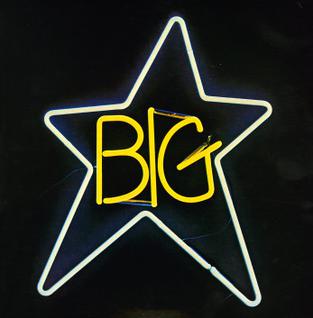
Big Star - #1 Record (1972)


1972 was a great year for music. Blue Öyster Cult released their s/t debut album and Black Sabbath, Deep Purple, The Rolling Stones, and David Bowie all released some great material. This was also the year Big Star made their debut, I never really got into Big Star to be honest until the recent death of vocalist/guitarist Alex Chilton on March 17, 2010.

The band brought a unique blend of 70's hard rock with the pop melodies and hamonies from the bands of the 60's like The Beatles, and The Kinks. These melodies really show on songs like The Ballad of El Goodo. The album also includes In the Street which would become the theme song of the hit sitcom That 70's Show, which ran from 1998-2006.

Although it didn't sell much at the time of release, #1 Record is considered one of the best albums of not only the 70's but one of the best albums all time. I really did enjoy the great blend of 70's hard rock and 60's British Invasion music, my only gripes with this album came with "The India Song" and "ST 100/6", both songs are lackluster at best, but this is album is a must listen to for fans of 70's music. Expect some more Big Star album reviews in the near future.

Favorite Tracks: The Ballad of El Goodo, Don't Lie to Me, When My Baby's Beside Me, My Life is Right

The Verdict: 4.0

Sunday, March 21, 2010

BioShock 2 - Xbox 360, PS3 (2010)


It's been about three years since BioShock was released. It was critically acclaimed the moment it was released winning multiple game of the year awards and leaving fans wanting more and anticipating the sequel. But does it live up to the hype of the original?

The game is set in Rapture once again, in 1968 about 10 years after the events of the original and shit has hit the fan. Though you're in different locations in the underwater city, the game maintains the exotic 1950's look of the original game. You play as "Subject Delta" one of the original prototype Big Daddies on a quest to find Eleanor, a Little Sister than you lost contact with many years ago.

BioShock 2 maintains the same FPS/RPG gameplay that the original had. As you progress through the game you can upgrade your character by modifying your weapons, augmenting your attributes with gene tonics, and giving him different plasmids/powers like electric shock, and incineration to name a few.

But BioShock 2 brings some new things to the table. Hacking involves precision timing with the a button now. You can either walk up to the machine/safe you want to hack and physically hack it or you can use your hack tool which works as a weapon which you can aim at and fire at a distance. If there is a room for of splicers and there's a security camera around, you can hit the security camera from a distance, hack it and sit back and relax while security robots mop up the room for you. I really liked the new method of hacking, added some new strategy and depth to the gameplay.

Gone are the old revolver, and tommy guns of the first game. You have a new arsenal of weapons that pretty much funtion the same as the old one, you have a rivet gun which works as your mainstay pistol/rifle, the Big Daddy drill as your melee weapon, and the machine gun which resembles a minigun but has the same rate of fire as a tommy gun. The rocket launcher makes it's return as well as the anti-personel/anti-armor rounds, and there are new forms of "trap" ammo for certain weapons which you aim and deploy with such as trip wires, electric wires, proximitity mines and mini deployable turrets. This adds to the strategy and comes in handy when guarding little sisters.

Perhaps my favorite addition to the game is the ability to use plasmids and guns at the same time compared to the first game when you could only use plamids/guns one at a time and had to switch. Left trigger fires plasmids, and the right trigger fires your guns. You can make some pretty sweet combo's, my personal fav is winter storm combined with the big daddy drill.

The gameplay is alot more tough than the first one. Splicers are almost everywhere this time and you have a few new enemies to deal with including the Big Sisters which make the Big Daddies look like a bunch of wimps. But I found the fights and battles to be alot more intense than the original and you will have to use your plasmids more than the first game which you could get through by running and gunning. The fights get really intense when you get a hold of a little sister. The original gave you the choice of harvesting or saving them. Well that choice is there once again but if you choose to save the little sister, you get less ADAM (Money used to buy plasmids/tonics), if you save the little sister you can get more ADAM by escorting them to dead splicers with ADAM and protecting them as they harvest it. This is where shit hits the fan.

Within seconds the eerie music kicks in and splicers are coming at you from all sides. This is where the trap ammo comes in handy. Some might not like this but I found the battles to be very fun. After you escort the little sister to two dead splicers, you have to take them to a little sister hole and that's where you get the choice to save them or harvest them. Adopting and harvesting yields more ADAM than adopting and saving but I enjoy the extra challenge.

With the slight increase in difficulty your health/eve (magic/mana) bar is very small compared to the original even with the increases you can get overtime. At most you can carry only 5-6 health packs/eve refills. BioShock veterans will have no problem dealing with this issue and the way I see it, it makes the game more challenging. On easy difficulty the gameplay was pretty hard and I did have a couple close calls, but that makes the game alot more refreshing.

Fans of the original BioShock won't take long to be acquainted with the sequel as the same visuals and core gameplay are back. There are some new additions and features to the game which add more strategy to your actions. I found the battles to be even better than the first with new enemies and insane battles where you have to actually rely on your plasmids to bail you out instead of your guns. I found the story to be...adequate but it was slightly lacking when compared to the original game. Did BioShock 2 top the original? No, but is still a good game? Oh yeah, it seems to me that 8/10's are the new 2/10, I don't understand the logic to that, but BioShock 2 is a great sequel that fans of the original will enjoy.

The Verdict: B+

Little King's Story - Nintendo Wii (2009)


One of the underrated gems of 2009, this game has ties to the Harvest Moon series with Marvelous Entertainment publishing the game. It blends elements of Pikmin and Harvest moon with a fusion of rpg, simulation, and real-time strategy.

You play as a young boy named Corobo who gets a hold of a crown that gives him powers of charm and persuasion which he can use to boss people around. You inherit a small weak kingdom Alpoko, with one goal, expand your kingdom through conquest and exploration. Your tools come in the form of your charm which you use to recruit "carefree citizens". You can use these carefree citizens and train them in different jobs/professions. Grunts make up the basic military, farmers are useful for digging holes and cutting down certain trees, carpenters build bridges, hunters are good for long range attacks, and there are other professions which you get access to as you progress. The game is very balanced and you can't get through the game by relying on only one profession, you need to have a solid blend of grunts, famers, carpenters and other specialists if you want to expand your kingdom.

But you need money when building your kingdom, you get that through exploration and conquest which gives you some fat loot that you convert to cash. You can use the money to buy more houses (gives you more carefree citizens, plus methods of collecting taxes), and buildings that you use to train citizens in certain professions. You get more buildings as you advance through the game and defeating monsters in certain areas allow you expand your kingdom to different zones/towns.

My favorite aspect of the game is watching your kingdom evolve and expand overtime, defeat a monster and your kingdom will have a party in town center with a trophy of the monster you defeated in the town square. Though the game is called Little King's Story don't let this turn you off because the game has a great playful/tongue and cheek style that will attract all spectrums of gamers. The soundtrack consists of modified classical music from Beethoven.

I said that this game has elements of real time strategy but don't come into this game expecting command and conquer gameplay. The controls and rts aspects of the game are very simplistic from the recruiting of citizens to giving them orders, all done with a simple aim and click with the a and b buttons. Some will enjoy the simplicity while others will hate it.

Overall this is a fantastic game with a great visual style and gameplay that fans of Pikmin and Harvest Moon will enjoy. My real complaints with the game is that aiming and pointing the direction you want to move your forces in is difficult, this isn't really a game breaker but when your battling monsters it can be annoying and may cost you some of your valuable citizens. Another problem is that many times you send the wrong unit at the enemy (sending a famer instead of a grunt, the farmer ends up getting his ass whooped, hitting down on the d-pad allows you to organize the units you want to send in first but in combat you might forget). The simplicity of the rpg and rts aspects of the game might turn off hardcore fans of the genres, but other than that, Little King's Story is a highly addictive game with a great style, a must own for Wii owners and fans of Harvest Moon and Pikmin.

Cing one of the developers of the game went bankrupt recently, and the game had very decent sales barely hitting the 100k mark in North America, Japan, and Europe combined. I really want to see a sequel to this game ( I heard Super Little King's Story is in the works) so if anyone owns a Wii, I recommend you go out and get this game and support the people that developed this gem.

The Verdict: A-

Seven Samurai (1954)


Director: Akira Kurosawa
Starring: Takashi Shimura, Toshiro Mifune

Seven Samurai is easily one of the most celebrated films in history, it was Japan's highest grossing film at the time and it set the standard for filmmaking and storytelling, its influence continues to show in later movies such as The Magnificent Seven (1960) which used the same plot structure but it was a western set in Mexico with gunslingers.

The story is pretty simple by today's standard but in the 1950's it was ahead of its time. Set in Feudal Japan, a defenseless farming village has been harassed and put under constant stress for years by a large group of bandits, about 40 of them. Desperate and tired of the bloodshead, the village makes a decision to send some villagers to a nearby city to find and recruit samurai to fight back, since they're very poor from constant attacks, their only currency is rice. Things don't go well for the poor group as they're turned down left and right by samurai and mocked/humiliated by the city dwellers because of their poverty. Their luck changes when they encounter an wise aging samurai named Kambei, who agrees to help them and in the process he helps recruit more samurai.

The first half of the movie involves the recruiting of the seven samurai, six are recruited originally but a seventh on tags along that technically isn't a samurai, but he is one of the key characters of the movie, Kikuchiyo played by Toshiro Mifune . Each samurai has their own skills, traits and personalities, a classic recurring theme that you will find in many action movies of the past and present. You will have your favorites but they're all great characters that are well acted and each bring their own flare to the film.

The second half of the film is the samurai and villagers preparing the defenses and of course the inevitable battle against the bandits. Not only do the samurai have to prepare the denfeses and train the villagers to fight, but they must deal with the tensions/stereotypes that the villagers have for them which Mifune's character sums up with a brilliant speech that I won't ruin.

The acting in this film is top notch. Toshiro Mifune, and Takashi Shimura (Kambei) dominate the screen but the remaining characters all have their moments especially the samurai, Heihachi is great at keeping the defenders morale high, Kyūzō is the silent and wise but deadly swordsman of the seven, Katsushirō is the young rookie samurai with great ambition, Gorōbei is the archer, and Shichirōji is Kambei's right hand man and a savy reliable veteran. Even the villagers have their moments and there are a few great characters among them, Rickichi, the young hothead who originally suggests defending the village and fighting back, and Yohei, the older more fearful villager who has some great moments of comic relief to ease the tension. A few minor complaints is that the villager characters take a back seat in the second half of the film and the bandits get little to no screen time, and they are treated like one dimensional villains

Seven Samurai has some fantastic action sequences near the end especially but, this is not an action movie even though its influence on future action/drama films was huge. This is a three hour epic, and it does drag at the first half of the movie but the second half really makes up for it, the soundtrack is very simplistic but beautiful and it adds to the suspense really well. The cinematography is great for the 1950's, the night time scenes were some of my favorite parts in the movie, as well as the classic battle in the rain sequence. I appreciate the detail Kurosawa put into the movie with the village scenery, the characters, the storytelling, and the battle sequences.

Its influence on later movies was immense, The Dirty Dozen, Oceans Eleven, any movie that involved the assembling of a rag-tag crew all owe their respect to Seven Samurai. This movie is easily one of those films you have to watch before you die, but be prepared to invest some time into it.

The Verdict: 5.0

The Wild Bunch (1969)


Director: Sam Peckinpah
Starring: William Holden, Ernest Borgnine, Robert Ryan, Edmond O'Brien, Warren Oates, Jaime Sánchez, Ben Johnson

The Wild Bunch stands out from your classic westerns like The Magnificent Seven, the fearless heroes with great morals and ethics saving the day. Set in the early 1900's, The Wild Bunch tells the story of a rag-tag crew of gunslingers struggling to stay together and survive in the changing industrial world that has no need for them anymore.

William Holden plays Pike Bishop, leader of the Wild Bunch. After a botched robbery attempt in Texas, the remaining survivors of the bunch regroup in Mexico in the middle of a revolution, they run into Mexican warlord named Mapache who offers them $10,000 in gold to steal a US army shipment of guns and ammo. Meanwhile Deke Thorton (Played by Robert Ryan), former friend/companion of Pike's leads a group of bounty hunters trying to find and kill the bunch.

Director Sam Peckinpah was out to make a statement in this film going against all the cliche's that previous westerns had. The Wild Bunch have little to no morals, all they care about is money. The opening scene with the bank robbery establishes this, with one of the members harassing a woman in the bank sexually, and a few of them use civilians as human shields to escape the carnage. This movie is violent, savage and ugly with little heroics. One of the members is shot in the face during the escape and virtually blind, unlike other westerns where the leader decides to save him with the "leave no man behind attitude, Pike puts the poor soul out of his misery."

The major theme of the movie though is the end of the "old age of gunslingers/mercenaries". The setting in this movie was fascinating with the 1900's. Machine guns, automobiles, pump action shotguns and grenades make appearances. One of Mapache's military advisors is a German general who is interested in gathering some intelligence on American weapons. There is a particular scene at the beginning of this movie where some have a few large scorpions and army of ants encircled, the scorpions representing the old gunslingers, and the ants representing the new modern era which outnumbers and tramples the scorpions.

The Wild Bunch is a fascinating movie that stands out from the classic western. Despite dragging at a few parts, this film is excellent and a must watch for western aficionados. It has some great acting, and the action scenes are well shot and executed, I'll go as far to say that the opening/closing action sequences are some of the best in the genre's history. I would have love to see Deke Thorton be fleshed out more because it seemed the director was trying to compare him to Pike in that they were both gunslingers of a dying age.

The Verdicts: 4.0

Citizen Kane (1941)


Released: May 1, 1941
Director: Orson Welles
Starring: Orson Welles, Joseph Cotten, Dorothy Comingore, Everett Sloane, Ray Collins, George Coulouris, Agnes Moorehead, Paul Stewart, Ruth Warrick, Erskine Sanford, William Alland

Originally a box office flop, failing to recoup its production. Citizen Kane had a re-emergence in the 1950's and today it is hailed by many as the greatest movie ever made. Orson Welles was a triple threat, producing, directing, and starring in the film. It also starred a variety of rookie actors/actresses at the time.

Citizen Kane is a story about the rise and fall of Charles Foster Kane, played by Welles. Originally the son of a poor family that ran a boarding house, Charles life is changed when it was discovered that his families boarding house was sitting on one of the largest gold mines in the United States. His mother sends him to live with a wealthy banker to have him educated and protected from his abusive father. Kane receives his fortune at the age of 25 and he takes over a struggling newspaper chain and specializes in "yellow journalism" a method of blowing stories out of proportions to sell papers, soon he becomes a heavy hitter and an American icon in the media.

The film opens in the form of multiple news stories that highlight the highs and lows of Charles Foster Kane leading up to his death. On his deathbed the last words he mutters is "Rosebud", the film then takes off with a journalist trying to investigate the meaning of the word "Rosebud", the journalist speaks with friends and associates of Kane that tell the story of the man through flashbacks starting with a young optimistic Kane taking over the New York Inquirer to his last days spent in his massive unfinished palace Xanadu.

Orson Welles is fantastic as Charles Foster Kane. The way his character ages and changes throughout the film was brilliant combined with his powerful iconic voice. Like Kane's character the film has that grand sensational feeling to it that makes you wonder if Kane was a self-centered spoiled jerk, or a lonely man trying to reclaim his youth that he lost at a young age. This film has many characters but Charles Foster Kane is the center of this film, the supporting cast was good considering that most of the cast consisted of first time actors/actresses but nothing to write home about.

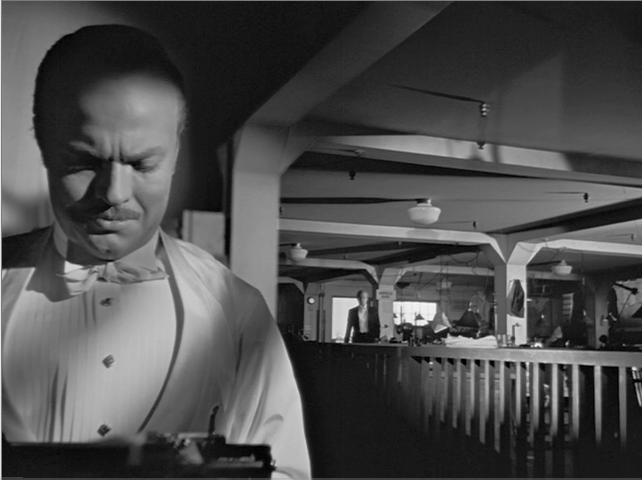
The film making is what made Citizen Kane. The storytelling, cinematography, the lighting, the sound...was ahead of its time from the deep focus camera work, to the story being told through flashbacks through different points of view.


Examples of deep focus used in the film.

Overall Citizen Kane was a good story with incredible cinematography, is it the greatest movie ever made? Hard to say right now, but it certainly makes a case. I found the supporting cast to be good but overshadowed by Welles, but the film is about Charles Foster Kane told through these characters.

The Verdict: 4.5

Alpha Dog (2006)


Released: January 12, 2007
Director: Nick Cassavetes
Starring: Emile Hirsch, Justin Timberlake, Bruce Willis, Shawn Hatosy, Olivia Wilde, Sharon Stone, Ben Foster, Amanda Seyfried, Anton Yelchin

Alpha Dog is a crime drama based on a pretty recent event, in 2000 a 15 year old Nicholas Marlowitz was kidnapped and murdered by a group of drug-dealers that were barely in their 20's at the time. The characters have different names in the film but the situation and circumstances are still the same. The film revolves around Johnny Truelove, a successful drug dealer in California who is living the high life, unfortunately one of his close associates owes him a couple thousand dollars but refuses to pay up. Things snowball from their and the associate ends up trashing Johnny's house. Johnny and his crew retaliate by kidnapping his younger brother and holding him ransom until he pays off his debt.

The kidnapping is portrayed as innocent and light hearted fun at first but things snowball from there and end tragically for everyone involved. The sad reality is that this incident was over $1,200 dollars. The film tries to be a powerful one but it comes up short most of the time, despite the all-star cast of young actors, Bruce Willis, Sharon Stone, and a pop star, the acting was very dull and lackluster, especially Emile Hirsch. Bruce Willis and Stone were good but their roles were small and they could have used a little more screentime.

It is a decent film at best, but you're not missing much.

The Verdict: 3.0

Carlito's Way (1993)


Released: November 10, 1993
Director: Brian De Palma
Starring: Al Pacino, Sean Penn, Penelope Ann Miller, Luis Guzmán, Joseph Siravo, John Leguizamo

Brian de Palma is known for his crime epics, from Scarface to The Untouchables. Brian de Palma and Pacino teamed up again in the early 90's with another epic, this time set in 1970's New York. Al Pacino plays Carlito Brigante a former heavy hitter in the criminal underworld who has just been released from prison, but this isn't a Tony Montana 2.0, Carlito's main quest is to go legit and save up some money so he can high tail it out of New York, but throughout the journey Carlito finds out that he can't escape his past.

Since his role in Scent of a Woman Pacino's roles onward have felt identical and stale from the raspy voice to the "hooah" catchphrase but he brought a down to Earth personality in this role. The film had me rooting for Carlito and his struggle to be free of the streets of New York all the way to the end. Sean Penn is great as Carlito's Lawyer/friend David Kleinfeld, which was main inspiration for Ken Rosenberg in GTA: Vice City. There were some great moments like the Grand Central escalator shootout, however the movie was lacking in the remaining supporting cast. I've never been a fan of John Leguizamo and the remaining mob characters were very lackluster and made random out of nowhere appearances without any real buildup or introductions despite a small bit part from Viggo Mortensen. With the exception of Pacino and Penn this is a crime epic lite, still worth a viewing though.

The Verdict: 3.5

Brazil (1985)


Released: February 22, 1985
Director: Terry Gilliam
Starring: Jonathan Pryce, Kim Greist, Michael Palin, Robert De Niro, Katherine Helmond, Bob Hoskins, Ian Holm

I've been a big fan of this film since I first saw it late night on the movie channel last year. The film was very strange but it had that "I've got to keep watching this" quality and charm to it. It's a dystopian black comedy heavily influenced and inspired by the book 1984, the settings are grim, plain, dark and very bureaucratic but it has that light-hearted/comedic approach that gives the movie a unique combination and allows it to stand out from Orwell's own vision.

The acting in this film is very good with Jonathan Pryce playing the low level bureaucrat Sam Lowry, he hates his work, and he hates his life, dreaming of a life of freedom and easy living in the countryside. But at the same time he is a slacker who is completely out of touch with reality because of the system he was born in. Robert DeNiro makes a suprising appearance as Archibald "Harry" Tutle, a small part but a big symbollic one at the same time.

Visually the movie is a fantastic from the 1984 visuals to the Monty Python esq humor. Though the love story bits weren't that good, everything else about this film was brilliant...a flawed masterpiece.

DO NOT WATCH the love conquers all 94 minute version though.

The Verdict: 4.5

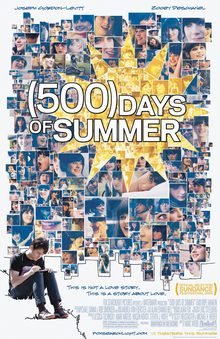
(500) Days of Summer - (2009)


Released: July 17, 2009
Director: Marc Webb
Starring: Joseph Gordon-Levitt, Zooey Deschanel

A very good romantic comedy, one of the better ones out there. Joseph Gordon-Levitt is fantastic and Zooey Deschanel is cute as a button. Joseph Gordon-Levitt plays Tom Hansen, an aspiring architect who has to settle for a job as a greeting card writer. His view on true love has been greatly influenced by his favorite band, The Smiths and the Dustin Hoffman film, The Graduate which is used as the main symbol throughout the movie.

The relationship between Levitt and Zooey Deschanel is fantastic from start to finish. You get the feeling that their love is real instead of the "this is cheesy I'm going to cover my eyes" type reaction that some will get from other love movies. Ever since The Lookout I've been a huge fan of Joseph Gordon-Levitt, his role in G.I. Joe managed to get audiences and critics going "this movie sucked but that Levitt guy was pretty good in it", and now with (500) Days of Summer, it looks like Levitt is on the way to becoming a big talent in the 2010's. Who knows.

The Verdict: 4.0