Thursday, April 22, 2010

Mercyful Fate - Melissa (1983)


Personnel:
King Diamond - Vocals
Hank Shermann - Guitars
Michael Denner - Guitars
Timi "Grabber" Hansen - Bass
Kim Ruzz - Drums

In 1983, Denmark's own Mercyful Fate released their debut album Melissa. The band did not have much time to finish the album and the album's producer Henrik Lund had an interesting method of producing the album asking the band to leave the sound room while he edited and worked on the tracks, then called them back in to the studio then asked the band to leave when he needed to make a change to the songs. Mercyful Fate was able to release Melissa and the album was a big success in the metal world, although the album is classic heavy metal, the band's style and sound influenced many bands from multiple genre's such as black metal, and power metal.

There isn't much to say about this album, when it comes to instrumentals Melissa can be compared to bands like Iron Maiden but the vocals are what really allow this album to stand out. Legendary metal vocalist King Diamond brought horror movie theatrics to Melissa, apparently King Diamond brought an altar into the studio when the band was producing the album. Guitarist Hank Shermann compared King Diamond's vocals to Robert Plant of Led Zeppelin and it's hard to deny that especially the high notes that Diamond hits on the album, originally Melissa was going to feature a cover version of Zeppelin's Immigrant Song, but that was eventually scrapped.

Mercyful Fate is one of those love or hate fans. The main game breaker will come down to King Diamond's vocals, while I enjoyed his vocals, some will not share this opinion and I can respect that. But if your a fan of that traditional heavy metal sound, I recommend Melissa to all.

Favorite Tracks: Evil, Curse of the Pharaohs, Black Funeral, Satan's Fall

The Verdict: 4.0

Sunday, April 18, 2010

Casino (1995)


Released: November 22, 1995
Director: Martin Scorsese
Starring:Robert De Niro, Joe Pesci, Sharon Stone, Frank Vincent, Don Rickles, Pasquale Cajano, James Woods, Alan King Kevin Pollak

Already known for his crime films, Mean Streets (1973), and the highly successful Goodfellas (1990), Scorsese returned to his winning formula in the mid 90's with Casino, which is considered a spiritual successor to Goodfellas.

Casino takes place in Las Vegas during the 70's and early 80's when the mob bosses in Chicago dominated the business and politics of Vegas, and their rise and fall to corporations and their own greed. Robert de Niro a long time companion of Scorsese plays Sam "Ace" Rothstein a master of betting on sports, his hot hand and methods of predicting the outcomes of sporting events attract the mob bosses who hire Sam to manage the Tangiers casino in Vegas. Despite his criminal records Sam is able to get a Casino license due to lax gaming laws and an inefficient system. He manages the Tangiers Casino efficiently eliminating cheaters trying to bankrupt the place and in the process he makes the mob bosses lots of dough.

The bosses send an old friend of Sam's, an enforcer/made man named Nicky Santoro to protect Sam, played by Joe Pesci another companion to Scorsese. Nicky is a hot head who only see's green when he comes to Vegas and he gets greedy going beyond his job, he brings in his own crew of enforcers and he starts to tear up Las Vegas setting up resteraunts and jewelery stores while committing burglary. His antics soon become an issue, attracting the police/feds and Nicky becomes blacklisted from all the major Casino's and his ties to Sam come back to haunt Sam's reputation among the gaming organizations which takes a toll on their friendship in the end.

Another part of the film is Sam's on and off relationship with Ginger McKenna a Casino hustler that he falls in love with, played by Sharon Stone. The relationship is frustrating to watch on screen, the two have a child but Ginger is still spending time with her ex boyfriend who is a con artist named Lester played by James Woods, and she is only in the relationship with Sam for his money and jewellery. The method to which Sam handles the situation is frustrating to watch at times, he kicks her out of his house, brings her back, kicks her out, it's like a vicious cycle.

You can easily compare this movie to Goodfellas in style. Casino uses a series of montages, and the main characters narrating at times giving the viewer their own points of view on the situation. Even a few minor characters get a chance to give their two cents. Scorsese shows off his flawless style and direction, however my main issue with the movie is that it relies too much on montages and narration. The first portion of the film is shot almost entirely with a series of montages and characters narrating their story. Combined with its 178 minute length, there are moments where the film drags.

As usual Scorsese brings back his usual cast with De Niro, Joe Pesci, and Frank Vincent who has a much bigger part in Casino than in Goodfellas as Santoro's right hand man. And like Goodfellas, Casino is chalk full of bloody violence and swears galore, about 420 f bombs are dropped in this near three hour film. While Nicky Santoro doesn't quite compare to Tommy DeVito of Goodfellas, Pesci delivers another great performance, and De Niro is quite contained throughout the film despite a few classic De Niro outbursts. I found the Sam/Ginger side story to be a little annoying at parts but Sharon Stone was a raging, money loving, drugged up mess, which is a good thing. She earned her best actress oscar nomination with this performance. Don Rickles, Kevin Pollak and James Woods complete the ensemble cast.

Casino is a long epic about the rise and fall of the mafia's control over Las Vegas. It tells the tale of how everyone in the organization got greedy and how their actions led to the mafia's downfall in Las Vegas and the beginning of a new consumer/corporate takeover of Vegas which is told in a rather depressing note. Fans of Goodfellas will enjoy this. I did enjoy Casino but it feels like another Goodfellas movie minus Ray Liotta and the movie did feel sluggish at times. Overall it is a good film but a step down from Goodfellas.

The Verdict: 3.5

Friday, April 16, 2010

Das Boot [The Boat] (1981)


Released: September 17, 1981
Director: Wolfgang Petersen
Starring: Jürgen Prochnow, Herbert Grönemeyer, Klaus Wennemann

Das Boot was an ambitious project by director Wolfgang Petersen, it became one of the most expensive films in German cinema history next to Fritz Lang's silent film Metropolis in 1927, it received five Academy Award nominations, and it was a major success in both Germany and the United States. It was based on the 1973 novel by Lothar-Günther Buchheim and his own experiences on a U-Boat in World War II.

German U-boats first saw major service in World War I being used by the German military to sink Allied naval ships to cripple their trade lines and war efforts. These U-boats inflicted heavy losses on the Allied navy in the first world war and the trend continued in World War II. Because of this, German U-boat crews had a reputation of being bloodthirsty cowards that relied on suprise. Das Boot turns the tables around telling the story from the Germans perspective with a more sympathetic view.

Das Boot is told through the eyes of a war journalist, Lt. Werner. He is assigned to join a submarine crew of U-96 in October of 1941. He meets the Captain of the submarine with no name played by Jürgen Prochnow, after an opening sequence at a brothel the crew leaves France on a long patrol that takes them through the Atlantic to Spain and the Allied naval stronghold of Gibraltar.

Das Boot's cast consists of various German and Austrian actors which helps give the film an authentic feel. There is an even mix of veterans and rookies among the submarine crew and each character feels very real and human, with their own strengths, weaknesses, and innocence. Going with the sympathetic view, many of the characters including the Captain show vocal criticism of the Nazi leadership, another character at the beginning of the film named Thomsen who is a decorated captain himself mocks Hitler and the Nazi regime in a celebration speech at the brothel. Some of these characters have nationalistic pride in their country but overall they just want to do their patrol and go home.

The Captain:


Jürgen Prochnow was great as the Captain, and Otto Sander made his mark with his short but memorable role as the Captain's friend Thomsen who was another submarine veteran, his scenes with Prochnow in the brothel came off as the old generation passing on and letting the new generation of rookies take over.

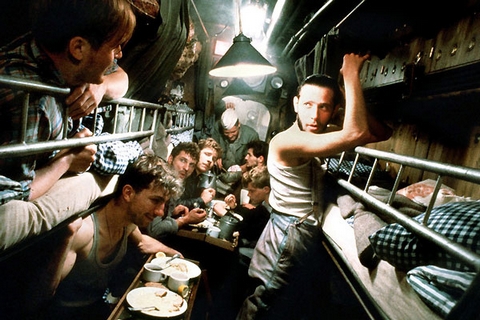
The set pieces are a huge highlight of Das Boot. Two mock U-boats were constructed for the movie. The production crew put great detail in the authenticity of the film and the interior of the U-boat shines in all of its dark and claustraphobic glory.

Some scenes:


One of the mock submarines constructed was used in Raiders of the Lost Ark (1981). German cinematographer, Jost Vacano compliments the film's set pieces with his hand-held camera creating a realistic/authentic feel with his camera shots that go through the submarine. The scenes where the camera runs down the interior sub while the crew prepares for battle really highlight the strengths of this film. Think of it like a shaky camera but done right, time to take some notes hollywood. German composer Klaus Doldinger's score blends the sound of 80's new wave with classical romanticism to create a unique soundtrack experience.

A great deal of effort was made to make this film as authentic as possible with several WWII U-boat captains serving as consultants including Hans-Joachim Krug, and Heinrich Lehmann-Willenbrock as well as the author himself who's personal photographs were used to create the grand set pieces used in the film. However Buchheim went on to criticize the films portrayal of the crew mainly for acting unprofessional in certain scenes where the crew celebrate and start to sing after sinking a ship, even criticising Petersen's adaptation as cliche. Thus the pitfalls that come with movie making.

I've always enjoyed movies set on ships and subs and the set pieces used. Das Boot comes off with a romantic and heroic portrayal of the U-boat crews. Petersen turns the tables turning these men who were considered cowards by the Allies and propaganda into heroes who were in dangerous situations themselves, the film states at the beginning that Allied anti-submarine weapons killed about 30,000 U-boat personnel and crew. There is one scene in particular where the crew sink a British vessel and they watch in horror as the flaming ship sinks and the survivors try to swim toward the sub but they cannot take prisoners and they leave the survivors to die in the sea.

The film is as anti-war as it is romantic, many of the crew members show anger toward the Nazi government because they feel as if their government is sending them to their deaths. There is an awkward moment were the Captain and his crew land in Spain for repairs and supplies and the war weary vets have an awkward encounter with some Nazi officials who throw a party for the crew, the equivalent of little timmy asking his Vietnam vet uncle if he got to kill anybody? The sub itself has a dark, claustraphobic feel to it and at times it feels like an underwater hell to some of the crew members. Overall Das Boot is a fine war film and it set the standard for current submarine movies. There are multiple versions, the directors cut I watched was a solid three hours and because of the length it does drag at some moments.

I recommend this film to all, I watched the english dubbed version and because a majority of the actors were able to do English voice overs for their characters it isn't really an issue but there was one character who didn't do an english voice over and you might be able to spot which character it is right away. I recommend that you watch the film in its German language. I will eventually watch this movie in German so I could see this movie grow on me in the future.

The Verdict:
4.0

Monday, April 12, 2010

Electric Light Orchestra - The Electric Light Orchestra (1971)


Personnel
Roy Wood: Guitars, Bass guitar, Cello, Oboe, Bassoon, Clarinet, percussion, period woodwind instrument; Krumhorn (as stated on original vinyl record sleeve), vocals
Jeff Lynne: Guitars, bass guitar, piano, keyboards, vocals.
Bev Bevan: drums, Percussion, vocals.
Bill Hunt: French horn, Hunting horn.
Steve Woolam: Violin.
Rick Price: bass on some original tracks (erased and redubbed by Wood and Lynne)

Later released as "No Answer" in the US in 1972. Funny story is that an US album executive called some associates of ELO to get the album name and they weren't able to get the name so they called the album "no answer" thanks to a big misunderstanding.

The early 70's consisted of several bands that were heavily influenced by the sound of The Beatles and other British invasion bands of the 60's. From Big Star to T.Rex, Electric Light Orchestra was heavily influenced by the sound of The Beatles but unlike the other two bands I just mentioned, they blended pop harmonies with pop/rock and classical music.

The Electric Light Orchestra is an album influenced by Baroque style music which was popular in the 16th to 18th centuries with composers like Vivaldi and Bach. Their debut album has the pop/rock harmonies but the use of cellos and violins give the album a much darker tone then their later works. At times the cello gives the songs a beefy/powerful sound and you start to wonder if Bach came back from the dead to produce this album. You can find various references to The Beatles on this one as from the track, "Look at Me Now" which has shades of Eleanor Rigby written all over it.

The Electric Light Orchestra is an album vastly different from their later albums and it was interesting to hear the "Baroque and Roll" sound they had going for it. There are a few songs that I really enjoyed like "10538 Overture" but the Baroque infused sound is still growing on me. It's an above average album but I would recommend it to fans of ELO who want to see the bands early roots, or even fans of psychedelic rock.

Favorite Tracks: 10538 Overture, First Movement (Jumping Biz), Mr. Radio

The Verdict: 3.0

Sunday, April 11, 2010

Billy Joel - Piano Man (1973)


Now if I judged an album based on the cover, I would have flushed this one down the toilet, but since I'm not shallow (I wish), I gave this one a spin. Beginning his career in the 70's, Billy Joel would become one of the top selling artists in the United States during his 30 year career. Despite his album successes, Joel was a polarizing figure in music, people and critics either loved his work or they hated it, who can blame people? The guy isn't exactly a model citizen, but honestly who is? Though Billy Joel would release his big billboard hits in the late 70's and 80's, his sophomore release Piano Man showcased Billy Joel's "signature sound".

Piano Man is all about Joel's songwriting with an emphasis on storytelling, simillar to a couple of singer/songwriters in the 70's, Elton John and Bruce Springsteen. The album has an emphasis on "western" themes with the small piano epics "The Ballad of Billy the Kid", "Travelin Prayer", and "Captain Jack". Though the songs are lighthearted in the storytelling department, these songs are entertaining and well done both instrumentally and vocally by Joel on the piano. But the best song on this album has to be the title track "Piano Man", Joel's definitive song, a fictionalized take on his early career in Los Angeles as a lounge singer. Though he isn't the best vocalist, Billy Joel's vocals are very distinct and he bring that honest working man approach to the songs and his delivery on tracks like Piano Man are great.

Despite the western theme on the album, there are a couple of songs that have a jazz/pop sound that would dominate Joel's later albums, like "Ain't No Crime", and "Worse Comes to Worse". Though the rest of the songs are filler compared to the big three tracks of this album, "Piano Man", "Ballad of Billy the Kid", and "Captain Jack", they maintain the albums pace and flow and they're decent at best pop songs. Overall this is a good album, fans of singer songwriters might enjoy this album, but like I said. Billy Joel is one of those love or hate musicians.

Favorite Songs: Piano Man, The Ballad of Billy the Kid, Stop in Nevada, Somewhere Along the line, Captain Jack

The Verdict: 4.0

Friday, April 9, 2010

Fight Club (1999)


Released: October 15, 1999
Director: David Fincher
Starring: Edward Norton, Brad Pitt, Helena Bonham Carter

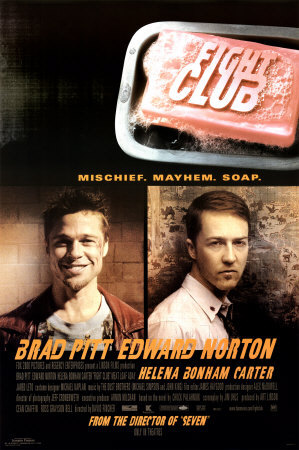
Fight Club is based on the 1996 novel by Chuck Palahniuk. Fight Club had mixed reviews at the time it was released and it wasn't a big box office hit that 20th Century Fox was hoping for. But like all "cult classics" the film had later success and today you can't get through a discussion about movies with friends without somebody name dropping Fight Club, and the famous "The first rule of fight club is, you do not talk about fight club." quote that has become synonymous with pop culture.

Edward Norton plays the narrator with no name who works for an automobile company. He lives a boring incomplete life, and he has severe problems with insomnia. He tries to fake his way into a support group of testicular cancer victims to cure his insomnia but that doesn't really work out. During one of his work trips he meets an unusual man on the airplane, a soap salesman named Tyler Durden played by Brad Pitt, his life changes completely and the two become pals. After a "fun" fist fight in a parking lot outside of a bar, the two start up a fight club in a local bar's basement.

Despite getting the shit beat out of him week after week, the narrator enjoys fight club, he finds it to be a means of breaking free of his boring life, and it gives him a new outlook on life, making him feel like a somebody. The club's popularity slowly increases overtime, corporations sponsor it, the two start to franchise fight club beyond their local headquarters establishing new clubs in other states/cities. Tyler also begins to take the club in a new direction going from fights in local bars to a city wide gangs/organizations committing small acts of vandalism that go from trashing small businesses/stores to setting office buildings on fire and blowing stuff up.

Fight Club is an interesting movie of mayhem, anti-authority, destruction, and nihilism. David Fincher called his film a coming of age movie for people in their 30's. The narrator is one of those characters that most people can relate to in some way. The film is filled with various quotes that sum up the movie in a nutshell, Tyler Durden's famous "We're the middle children of history" quote especially. Because of that the film has a really gritty/dark feel with the cinematography, though the movie title is misleading the fights in the film fit the cinematography, they're bloody, grimy, and visceral.

The acting in this film is top notch. Brad Pitt and Edward Norton both put on great performances as Tyler Durden and the narrator. Norton is the stale boring office desk employee and Durden is everything Norton's character isn't but wants to be, confident, unpredictable, exciting, etc. Brad Pitt deserved an oscar nomination for his role. The movie also has great performances from Helena Bonham Carter who's Norton's love interest Marla and musician/stage actor Meat Loaf is great with his small part.

I'm starting to become a fan of David Fincher's film style. Fight Club does it all, even breaking the 4th wall at parts in the film. My only complaint with the movie was that I found the first twenty minutes to be slow at times but once the narrator meets Tyler Durden the rest of the movie is a rampage of epic proportions until the end. One of the best movies of the 90's that lives up to the hype and praise, I will view more movies by Fincher but if you're a fan then you have to see this film.

The Verdict: 4.5

Tuesday, April 6, 2010

Deep Purple - Fireball (1971)


Personnel
Ian Gillan - vocals
Ritchie Blackmore - guitar
Roger Glover - bass
Jon Lord - keyboards, Hammond organ
Ian Paice - drums

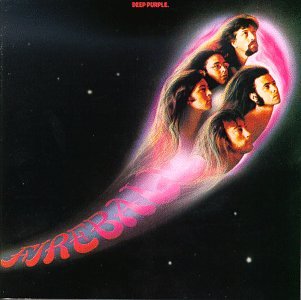
The Mk II lineup of Deep Purple was off to a great start with their classic Deep Purple in Rock album which was a big success. It made perfect sense to release a followup about a year later, Fireball. The album hit #1 on the UK charts which would mark the beginning of a small streak of #1 albums after Fireball's release.

The album is a classic example of a sophomore slump, I know this was the bands fifth album but this was the second one for the Mk II lineup. The title track "Fireball" opens the album with a bang, but the rest of the album moves at a slower more bluesy pace compared to the title track and In Rock. I can't say anything else about the album, Strange Kind of Woman, The Mule, and Fireball are solid tracks but the album feels kind of lifeless and bland when stacked up to In Rock. Maybe this album will grow on me down the road but I'm not really liking it.

Favorite Tracks: Fireball, Strange Kind of Woman, The Mule

The Verdict: 3.0